4.9%. That’s the columbia acceptance rate for the Class of 2029—lower than most Ivy peers and shrinking every cycle. If you’re an Indian student eyeing Broadway and Big Apple internships, those odds feel both thrilling and terrifying. Let’s unpack what the numbers hide and how to tilt them your way.
What is the Columbia acceptance rate?
Searchers want one clean figure; Columbia gives them a maze. The columbia acceptance rate headline for 2025 sits around 4–5%, but ED applicants see a three-to-four-times jump while RD hopefuls fight for scraps. Crimson Education keeps a live table of admits, apps, and year-over-year changes: check current stats here. The real pain point? Most sites stop at the overall rate and skip the split by school (Columbia College vs. Engineering), leaving you to guess where you fit. ED vs. RD timing is another blind spot—especially for international students who can’t afford to miss a single strategic window. If you’re still deciding between EA, ED, or REA at other Ivies, our quick guide breaks down the calendar: https://afbf.in/blog/early-action-vs-early-decision-usa-indian-students/.
Why does the Columbia acceptance rate matter?
A sub-5% rate isn’t just bragging rights—it dictates how you build your entire college list. Apply too optimistically and you burn valuable time on essays; ignore Columbia and you might pass up New York’s research hubs and Core Curriculum brand. For internationals, the columbia acceptance rate also shapes financial-aid expectations and visa documentation timelines. EduAvenues’ breakdown shows how admits from India, China, and Korea stack up: see international admit trends. In short, understanding the rate saves you money, effort, and heartbreak while keeping your dream alive. Ready to dig into the numbers, year-by-year data, and what Columbia actually wants? Let’s move to the data.

Understanding the Columbia acceptance rate
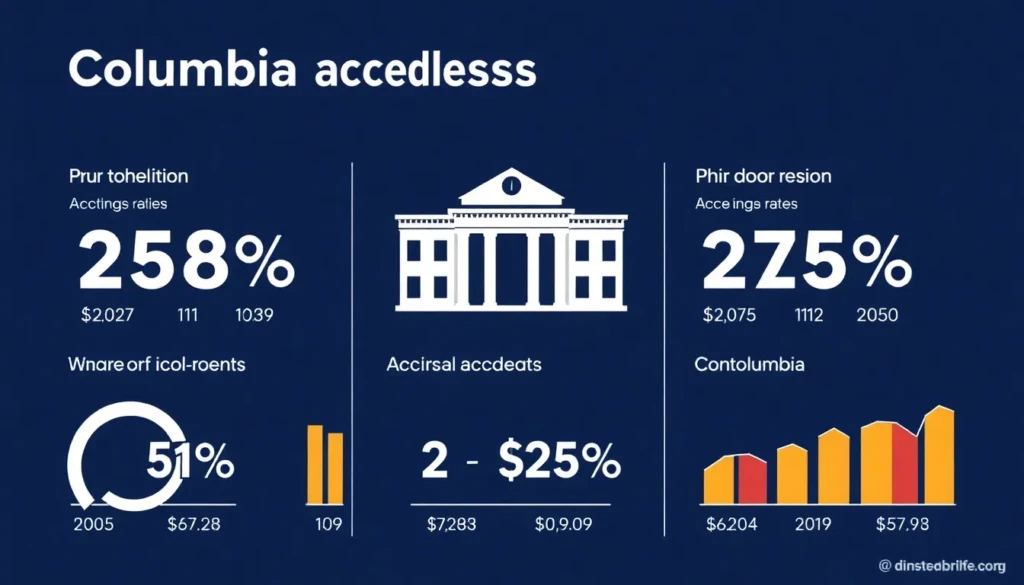
The columbia acceptance rate keeps sliding—4.9% for the Class of 2029, down from 6.1% just four years earlier. Columbia now receives roughly 60,000 apps for 3,000 seats, and the squeeze is tighter for internationals who fill only 17% of the class. CollegeAdvisor maintains a live table with year-by-year admits: see the numbers here.
Early Decision vs Regular Decision
1. Mark the calendar: Columbia offers only ED, no EA. The ED deadline is Nov 1, decision mid-Dec.
2. Know the math: ED bumps your odds 3–4×. For 2029, ED sat near 12%, RD around 3%.
3. Calculate binding risk: If admitted, you must enroll and withdraw other apps.
4. Prepare finances: International students often skip ED fearing aid gaps; run the net-price calculator first.
5. Build a balanced list: Pair Columbia ED with non-binding safeties and rolling U.S. options in case of a deferral.
Need a walkthrough of ED rules, aid forms, and timelines for Indian applicants? Check our starter guide: https://afbf.in/blog/indian-students-us-undergrad-guide/.
Comparison with Ivy League peers
Columbia’s 4.9% edges out Princeton (5.6%) and Yale (5.2%) but trails Harvard (3.4%). Yet Columbia’s NYC location means more apps per seat than rural Ivies. Cross-admit data from IvyCoach show STEM hopefuls often pick MIT or Stanford over Columbia SEAS, giving CC a slight Humanities yield bump you can factor into essays: benchmark insights.
Factors influencing acceptance rates
Beyond raw stats, Columbia layers on fit, Core buy-in, and institutional priorities. Below are the levers you can control.
Campus events impact
Application volume spiked 9% after Columbia’s 2023-24 campus protests made global headlines. Some overseas parents worried about safety; others saw activism as a learning lab. Either way, the surge intensified competition. DukesPlus tracked the uptick and notes that essays addressing constructive dialogue with peers stand out in high-stress cycles: real-world validation.
Scenario: Two Indian CBSE students, both 97% avg, 1550 SAT. Applicant A wrote a generic “Why NYC?” essay. Applicant B wove in Columbia’s mandatory Conflict Resolution workshop and a Model UN incident where she moderated heated debate. B got in, A was wait-listed. The takeaway: show you understand—and can contribute to—the campus culture, especially when external events raise the temperature.

Final thoughts on Columbia acceptance rate
The Columbia acceptance rate remains a strong signal of how selective the university has become, but numbers alone don’t tell the full story. For applicants, this rate should anchor planning, risk assessment, and timeline choices. A realistic view helps you decide when to push for Early Decision, when to optimize a RD profile, and how to balance ambition with a solid safety list. The columbia acceptance rate has trended downward over the past few cycles, especially in the most competitive programs, so your strategy should emphasize fit, preparation, and timing.
Key takeaways to act on now:
- Know where you fit. Map your profile to Columbia’s core strengths and the specific program you want.
- Consider Early Decision if you can commit to Columbia and your finances align; ED odds tend to be meaningfully higher.
- Strengthen academics and rigor, then pair them with standout essays and recommendations that reveal your unique contribution to campus life.
- Build a practical college-list that includes comparable Ivies and strong programs to keep options open.
- Plan for cost and financial aid early, especially for international applicants.
If you’re building a targeted plan, our college-list-building guide for Indians can help you craft a Reach–Match–Safety strategy: https://afbf.in/blog/college-list-building-for-indians-reach-match-safety/. For ongoing, current rate snapshots, see trusted data sources like Crimson Education: https://www.crimsoneducation.org/us/blog/columbia-acceptance-rate.
FAQ
H2 – FAQ for columbia acceptance rate
H3 – What is the current Columbia acceptance rate?
The current Columbia acceptance rate sits in the low single digits, typically around 4–5% for recent cycles, with Early Decision odds notably higher. Always check updated benchmarks from trusted sources as numbers shift year to year: https://www.crimsoneducation.org/us/blog/columbia-acceptance-rate.
H3 – How do I improve my chances of acceptance?
Here’s a practical approach: align your profile with Columbia’s strengths (academics, leadership, and community impact), consider Early Decision if you’re sure about Columbia, craft a compelling “Why Columbia” narrative, and ensure your GPA and course rigor show readiness for the Core Curriculum. For deeper strategy, see how Early Acceptance rates influence outcomes: https://toptieradmissions.com/columbia-university-early-acceptance-rate-what-it-means-for-your-admissions-chances/.
H3 – Does Columbia College vs Engineering have different acceptance rates?
Yes—programs vary, and engineering outcomes often differ from liberal arts tracks. Look for program-specific data to calibrate expectations and plan your application accordingly: https://www.eduavenues.com/blog/columbia-acceptance-rate.
H3 – Do interviews matter for Columbia admissions?
Interviews can reinforce fit and character; they’re another chance to demonstrate how you contribute to Columbia’s community. Learn how interview strategy intersects with overall selectivity: https://www.ivycoach.com/university/columbia-university/