Introduction (50-word lead)
stanford acceptance rate is more than a number; it’s a planning tool for ambitious applicants. A clear read helps you calibrate GPA targets, test plans, and project work. This post lays out the latest figures and practical steps to navigate Stanford’s selective admissions landscape. Read on for sources and strategies.
What is the current Stanford acceptance rate?
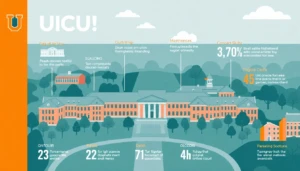
People search for the current stanford acceptance rate to gauge odds and plan applications. The Stanford Daily reports a rate around 3.68% for a recent cohort, reflecting fierce competition and a sizable applicant pool. That headline figure matters, but you’ll win with a well-rounded profile: research, recommendations, and clear fit. For a quick reference, see the Stanford Daily article linked here. To sharpen your planning, also review our college-list-building-for-indians-reach-match-safety framework, which helps you balance aspiration with practicality.
Why is knowing the Stanford acceptance rate important?
Knowing the Stanford acceptance rate helps you frame your application strategy rather than chase a single number. It guides how you allocate time to academics, test prep, research internships, and meaningful projects. It also informs your college list—which schools to treat as targets, reaches, or backups—so you don’t overfit one option. For expert strategies that translate data into action, see this in-depth guide: https://www.collegetransitions.com/blog/how-to-get-into-stanford-data-admissions-strategies/. This context keeps expectations realistic and your planning concrete as you build toward your best possible submission.

What factors influence Stanford acceptance rates?
stanford acceptance rate is a moving target—3.68 % for the latest class—shaped by applicant surge, yield math, and demographic shifts. Three drivers keep pushing the number down:
-
- Applications up 30 % since 2020, seats flat at ~1 700.
-
- Restrictive Early Action funnels 9 000+ files into a 9 % admit pool.
-
- International cap means only ±3.7 % of admits come from outside the U.S.; for Indians that’s ~40 seats out of 3 000+ applicants—an effective stanford acceptance rate under 1.5 %.
For year-by-year tables, Top Tier’s data sheet is the fastest reference.
How have recent trends affected acceptance rates?
1. Test-optional policy → 30 % jump in total apps; yield stayed at 82 %.
2. CS boom → 18 % of all Stanford apps now list “Computer Science” as the first major; internal admit rate for that group is <3 %.
3. Financial-aid expansion → more full-pay international students compete for the same capped slots.
Result: even perfect scores don’t guarantee entry; depth in research or impact projects is the differentiator. Need funding for those projects? Our top scholarships for Indian students guide lists awards that can bank-roll research, start-ups, or summer labs.
What demographics are currently represented?
Latest admitted class snapshot:
| Group | Share |
|---|---|
| Women | 54 % |
| Domestic students of colour | 55 % |
| International | 16 % |
| First-gen | 19 % |
Within the 16 % international slice, India, China, and South Korea jostle for the biggest share. If you’re an Indian girl building a health-tech NGO, you hit two under-represented filters at once—use that to your advantage. For a deeper demographic breakdown plus tips on positioning, IvyWise’s Stanford walk-through is worth a skim.
How does Stanford compare to other institutions?
Stanford’s 3.7 % sits between Harvard’s 3.4 % and Columbia’s 3.9 %, but Stanford is test-flexible and engineering-heavy, so STEM applicants face steeper odds than humanities hopefuls. Example: an Indian applicant with a 1570 SAT and state-level math olympiad medals might still be wait-listed for CS, yet the same profile could snag Yale EE or Princeton ORFE.
Benchmark comparisons:
-
- MIT: 4.1 % overall, 2.1 % for CS.
-
- Caltech: 2.9 %, but only ~240 seats.
-
- Ivies: 3–6 %, but larger class sizes and no engineering “mega-major” funnel.
If you want side-by-side numbers, Crimson’s global dashboard updates admit rates for Stanford plus peer schools every admission cycle.
What are the admission rates for similar schools?
Use-case: Riya, CBSE 97 %, 1550 SAT, national physics topper.
-
- Stanford CS: wait-list.
-
- Berkeley EECS: admit.
- Georgia Tech CS: merit scholarship admit.
Takeaway: stacking reach, match, and safety engineering programs keeps your plans alive when Stanford’s rate dips below 4 %.

How to enhance your chances based on Stanford acceptance rate?
stanford acceptance rate remains tight, so practical planning beats wishful thinking. Focus on four pillars: academics, research, leadership, and fit with Stanford’s programs. A disciplined timeline helps you build a standout portfolio rather than last-minute patchwork.
Actionable steps:
- Sharpen academics and choose a rigorous course plan that shows mastery in your field.
- Pursue meaningful research or internship projects that you can discuss in depth in your essays and interviews.
- Gather strong recommendations from mentors who can speak to sustained impact and curiosity.
- Craft a clear “Why Stanford” narrative that maps your work to Stanford labs, centers, or initiatives you want to join.
- Start early on your college list and create a balanced Reach–Match–Safety plan. For India-focused guidance on rejection and rebound, see our India rejection guide: https://afbf.in/blog/college-rejection-guide-india/.
AFBF can help you translate those steps into a concrete plan: timelines, activity deep-dives, and a realistic pathway to your target programs. If you’re navigating this as an Indian applicant, you’ll find our profile-building resources especially useful as you prepare for a competitive cycle.
FAQ for stanford acceptance rate
What is the latest Stanford acceptance rate?
The latest widely cited figure sits around 3.7% overall. Different outlets report small fluctuations by class, but the trend stays tight. For a validation of recent numbers, you can explore industry analyses like Understanding Stanford’s acceptance rate. Remember: the number is important, but your profile—research, projects, and fit—often matters more in practice.
How can international students improve their application?
International applicants should lean into distinctive research, leadership, and impact—things that travel well across borders. Build a strong narrative around how your work connects to global or cross-cultural contexts, secure compelling recommendations, and demonstrate sustained engagement beyond classroom achievements. For practical international-focused guidance, see Stanford admission insights for internationals.
What role do tests play in Stanford’s current admission landscape?
Stanford has been flexible on tests, but tests still matter as one piece of a larger story. If you have strong scores, they can strengthen your case, especially when paired with robust projects and evidence of sustained impact. If you’re navigating test choices, credible analysis from admissions experts can help you decide whether to test-score or test-light. See related perspectives in the field, such as Stanford-focused admissions guidance.
Do engineering vs humanities have different odds?
Yes. Engineering and CS often see stiffer competition due to large applicant pools and program demand, while humanities and social sciences may offer different strengths in essays and research angles. Understanding program-specific expectations can help you tailor your portfolio and letters.
What should Indian applicants do in the next 12 months?
Map a strategic calendar: select a couple of high-impact research projects, secure internships, and build leadership experiences that align with your target Stanford programs. Prioritize depth over breadth, secure strong recommendations, and refine your essays to show a precise fit with Stanford’s initiatives. If you want a structured plan, revisit our India-focused rejection-to-recovery resources and build from there.
Click on the link below and fill up the Google Form, it will take you 2-3 mins. And we will reach out to help you with your study abroad dreams. Don't worry, it's free & there are no hidden charges.
AFBF Join Us Form